Aug 4, 2016 Free Verse, Original Poetry
Afternoon-Flight
©August 4th, 2016
By Vijaya Sundaram
Flash of blue sails across sun-drenched air.
Japanese maple stands, glad to receive bird
With open branches and dappled leaves.
Glints of gold on green and flutter of leaf and feather
Gently open my tight-breathing heart,
With its Elsewhere just a step away,
And pour in peace.
Blue-jay, harsh of voice, but oh, so grateful
For air and light and shelter!
Traffic sounds from far away, a soft reminder
Of human time.
But why remember it?
Time is a thief.
Human time is bondage time.
Bird-time is peace.
And tree-time, endless.
_____________________________________________________________
Tags: #Birds, #OriginalPoetrybyVijayaSundaram, #Peace, #Time, #Trees
Nov 15, 2015 Friday Fictioneers, Original Flash Fiction
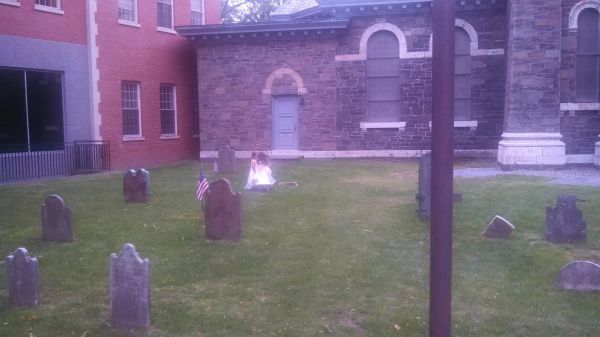
PHOTO PROMPT – © J Hardy Carroll
Where Have All the Flowers Gone?
© November 15th, 2015
By Vijaya Sundaram
Genre: Realistic Fantasy Death-Fiction
Word Count: 100 words of text exactly
So much sorrow in the world, so much war, so many dead! All that waste, all those fathers gone, those flowers with their heads in the dust make me thirst for life.
I sit day after day in this cemetery, not because I love death, but because I mourn life. I tend to the graves of those whose families have forgotten them. That woman and her child over there come every day. They are beautiful, enshrouded in mystery.
The woman looks up, sees me, pales.
I try to send reassurance her way. My scythe gleams.
_________________________________________________________
With thanks, as always, to our Fairy Blog-Mother, Rochelle Wisoff-Fields, for being a lovely host to all of us who write as Friday Fictioneers, and to J. Hardy Carroll for that touching photograph.
I type this at my brother’s home in New Delhi, India. I’ll be leaving to go back to Pune, India, where my mother lives, to spend the rest of the following week there. Back in the US on the 23rd. Missing you all. Sorry about not being able to comment much — Internet connectivity is an issue.
Tags: #Death, #Life, #Peace, 100-word original short story based on a photo prompt, War, Where have all the flowers gone?
Oct 12, 2015 Original Poetry, Writing 201
I have NEVER done “Found Poetry,” nor have I ever attempted chiasmus as a device, although I knew of it, and had encountered it. It seems that these days I’m doing things that I’ve never attempted. In any case, today’s (Day 6) assignment, in brief, was:
Create a “found poem”
Make it about “faces”
Use “chiasmus.”
I’ve typed up the text of my found poem, which I assembled from tea-bag covers, junk mail, an art catalogue, and a plastic bread-bag. Not having a working camera currently, I took an awkward picture with my MacBook Pro’s PhotoBooth. So, the picture below looks, let’s face it, bad and blurry. However, I shall remedy that when I can get a clearer image with a working camera. In any case, here’s the image, and then, my typed-up text below it, for those who cannot discern the words.
(Oh, and I was thrilled to FIND my chiasmus in the process of looking for words! The first line occurs on line 10 (after the heading, which is “Not When Pigs Fly”): The Power of each woman’s face. The second part of the chiasmus occurs as the punchline, the end: “Face each woman’s POWER.”)

Here’s the poem, in its entirety:
Not When Pigs Fly
©October 12th, 2015
By Vijaya Sundaram
We are women —
Friends of the earth,
Hope,
The People,
wise,
The Majority.
We shall converge on LITTLE DREAMS,
GIVE Clarity.
No Blisters.
Guaranteed.
VISIONS OF THE UNCANNY —
THE POWER OF each woman’s face
EXHIBITS passion,
SUPPORTS MEMORY.
SURVIVING THE ELEMENTS,
ULTRA CONCENTRATED,
OUR MUSIC ROLLS ON.
WE ARE PEACE.
WE ARE the Earth.
face each woman’s POWER!
Tags: #Face, #Hope, #Peace, #Writing 201, chiasmus, Dreamer of Dreams, Found Poetry, poetry challenge!, The Earth, The power of women
Apr 9, 2013 Uncategorized
This is my second Poem-Response to “Pigeon” (film by Anthony Green)
Slingshot
©By Vijaya Sundaram
April 9th, 2013
Poor, poor bird,
Alone in the world
At the mercy of boys
With slingshots.
Just there,
Nowhere else to go
Nothing else to do
But just be and peck
At crumbs of mercy
Tossed its way.
Every crumb matters
Every gesture burns
As a brand in the dark.
Every act of goodness
Lasts an eternity.
Though the cruel day
Comes, hell-bent on
Exposure and betrayal,
Each kindness leaves
A trace.
And the bird survives for
Another day, another hour.
Though cruelty
Dogs its steps.
Every kindness brings
Life.
Every saving brings
Hope.
Every crumb brings
Fullness.
And somewhere,
In another world
In another time,
Those traces will come
To live and glow
Through eternity.
And life will take wing
In the light of peace.
And only goodness will
People that world, with
No slingshots in sight.
~~~~~~~~~~~~~~~~~ The End~~~~~~~~~~~~~~~~~~
Tags: #Hope, #kindness, #NaPoWriMo, #Original Poetry, #Peace, fullness, Saving, Slingshot
Apr 3, 2013 Original Poetry
Utopia Will Exist!
©By Vijaya Sundaram
April 3, 2013
If I say so, it will be!
When society grows sick and pale
And wan with civilization,
I’ll quietly slip away, vanish
Through its revolving doors, elsewhere.
In this time and place, far away,
The deep forest grows wild outside
My door. And jasmines will bloom bright,
Moon-white, beside a silver stream.
This world will have strange and lovely
Fruit all sweet and rich and light-filled,
And swollen with the sun’s desire,
Pregnant with juice, bright, sinful, rich.
And the bees will buzz crazily,
Greedily around the flowers
Growing bright and sweet and golden
Glowing with nectar and promise.
And the heady scent of it all
Will waft dreamily through the still
Quiet air, slumbering in peace,
Languorous, sated with noon-sun.
And a dreaming child of five will
Lie on the grass beside the stream
And his hair will glow like water
While his dream-mother reads aloud.
And the world’s story will unfold
A new story never been told
And it will be gentle and good
— Wait! There’ll be a hint of chaos.
And I will step closer, impelled
By a strange force, but unwilling
To hear and listen. But they’re here
In my own world, and how dare they?
When story-chaos enters here,
The very air will shift and change,
And turn on its hinges, away
From my world and its lulling peace.
And I will flee far from that turn,
Chase after that revolving door,
And slip away again, this time
Into a world even farther.
And I will fill this new-found world
With just a few people, and they
Will resemble no one at all
Creatures of light, of air, of song.
And we will sing those songs. We shall
Dwell in silence, and our forests
Will be deep-rooted, strong, with us
In them, singing, winging skywards.
And the air will be strung with beads
Of light, and our songs suspended
Like drops of dew upon the leaves,
While we live in unchanging bliss.
It will not bore me, and slay me
It will not, I say. I like peace
And non-action. I like being.
And I like all that nothingness.
So, don’t entice me with chaos
Don’t bring storylines and shadows.
And say Utopia isn’t real.
It is, I say! It exists, here!
And if I say so, it will be!
~~~~~~~~~~~~~~~~ The End ~~~~~~~~~~~~~~~~
Tags: #Chaos, #NaPoWriMo, #Peace, Being, civilization, creatures of light and air, New World, Nothingness, revolving doors, storylines and shadows, Utopia, world's story
Feb 19, 2013 Awake in Dream Time - Journal Entries about the almost real, the surreal and the unreal, Awake in Real Time: Coffee-induced Meditations and Journal Entries
The Red Rectangle
© By Vijaya Sundaram
Written on Thursday, Jan. 25th, 2006
~~~~~~~~~~~~~~~~~~~~~~~~~~~~~~~~~~~~~~~~~~~~~~~~~~~~~~~~~~~~~~~~
I am an imposter in the world of the real.
Yesterday, I went to the Institute of Contemporary Art in Boston, and had an atavistic encounter with art — in the room that contained the “red rectangle.” I cannot remember the name of the installation artist, because my mind was busily paper-shredding all the petty numbers I had to rustle up to “feed the beast” (that remarkable phrase which my husband kindly created for me when I ranted petulantly about submitting quarterly grades for my eighth graders). This beast demanded a sacrifice. Numbers satisfied it.
So, there I sat on a subway train rumbling angrily through Cambridge into Boston, seated beside my Head of the Department of English, while internally stacking up inventive curses against an administration which demanded that we turn our grades in before noon on an “Early Release Day.”
The rest of the afternoon was to be a “professional day,” with the English and History departments taking a trip to the ICA. Most of us wanted to be back at school, being PROFESSIONAL, and doing our grading without the added pressure of taking the “T” all the way to the waterfront by 12:30. p.m. Three, tearful, silent meltdowns between school and there and out did not make me look very professional, I admit, but I didn’t care. Weariness was hugging my bones, and exhaustion was curled up in a fetal position in my cerebral cortex, hiccuping, vibrating in my ganglions.
So, there I was at the ICA, not in the least bit in the mood for modern art, fully prepared to be cynical and criticize everything, just because … and there it was: The Red Rectangle.
It looked kind. I looked, hypnotized, into that glowing red rectangle, and walked towards it, thinking, “Is it real?” It seemed to be a bi-dimensional red thing on the wall, pretending to be art. I walked closer, impelled, in spite of myself, by its arterial redness, a translucent ruby-red, space-less projection – and bumped into a wall that stopped at my waist.
I put out my hand, thinking, “It’s not real, is it?” My hand went through the redness, catching air, crimson air that escaped easily. I had been expecting a wall. Instead, beyond it was space – a red space, like a room that was hard to see. It seemed like a cradle for a star or a planet. It was outer space in an alternate reality. It carried the primordial promise and message of blood. It was a womb. It wasn’t an angry red. It looked peaceful.
I felt my breath turn into a many-edged diamond in my throat, crystallizing into sharp points. I looked vaguely about me, and everyone who was there seemed to recede into the far reaches of reality.
What was I doing here, on the outside? I needed to be in there, inside, in that alternate world. I would make my home there, in a nest of straw, a nest of dreams, and plump myself up, ruffle my feathers, stick my head in softness that was everywhere and nowhere, curl up, and fall fast asleep never to wake up for a hundred years, waking up in dream-time. I would escape reality forever. My home was in the land of the unreal, more real to me than this world.
The diamond dissolved. This was home.
It would be the world of the unreal real.
I would not be an imposter there.
And I would carry that red rectangle back with me, deep within my womb back into the world of the real.
~~~~~~~~~~~~~~~~~~~~~~~~~TheEnd~~~~~~~~~~~~~~~~~~~~~~~~~~~
Tags: #Peace, Art, Boston, Dream Time, Dreaming, grades, Institute of Contemporary Art, teachers, womb
Feb 17, 2013 Awake in Real Time: Coffee-induced Meditations and Journal Entries, Teaching and Learning
What would I like to post?
I’d like to post a letter to this planet:
Hello, Earth! What have you been up to in the past week?
Ah yes, a meteor hit the upper atmosphere above the Urals in Russia. Tethered to the planet, we see signs of an imminent inescapable route to extinction. Right? Wrong!
Okay, we are seeing the signs of a possible mass extinction. I mean, didn’t millions die? What’s that you say? Oh, about 1,200 people were injured from the shock generated by it?
Regardless, I feel bad that such a thing happened, and guilty because I’m glad it didn’t happen here, or at least it hasn’t happened yet.
So, when that meteorite comes blazing out of the sky, that’s it, then. How apocalyptic, how random, how utterly pointless to have that tangent to our circle which goes off-course!
We need a blanket that repels those visitors from our solar system, and not just the atmosphere. Let’s create one now. Right!
What however, if you, Earth are suffering from an auto-immune disorder known as human life? What then? Will we be long gone before any meteoric strikes of the truly apocalyptic variety?
Do you remember what happened in December, those events whose shock waves continued into January, O Earth?
Two terrible events came to occupy our news — on December 14th, six adults and twenty children died in an elementary school because of the unhinging of a man, and on December 16th, a twenty-three year old Indian woman was brutalized in the most horrifying way by six unhinged men.
The first event created sorrow and despair in all of us, but it wasn’t long before the crazies in the organization that aims to “protect” the Second Amendment, all stepped up with bizarre rationalizations for MORE weapons. When that meteor came and struck, some went about, creating false myths about it, turning a blind eye to that which was under their noses. Where did the souls of those people go? Where has conscience fled? Where have empathy and reason gone? Are those people who deny the massacre even human?
After the horror of the young woman’s death, India came together, and has had mass rallies, protests, clashes with the police, men and women speaking out against the blame-the-victim attitude of a male-dominated society. Awareness hit like a shock wave, and shattered many people’s hearts. In many Indian cities, men are becoming more aware and women are standing up for their right to be free in a fettered society, while the male-dominated Indian villages speak about pernicious Western influences and blather on about how women dress, which, they proclaim, invites their fate. What does it take to change the minds of all people? What MORE will it take?
Meanwhile, wars continue around the earth. Women and children get sold into slavery, to be exploited brutally, then killed when things get complicated for the exploiters. Young men, the best and sometimes (but not always) the brightest, push off to fight other young men, eliminating any future for either. Greed is rampant. Fear and hatred rule the foolish and the venal. Everything, but EVERYTHING becomes a mind game, or worse, a game of war and peace.
And we buy, buy, buy, more and more stuff, more and more electronic and digital toys. And somewhere in the Congo and elsewhere close by, women and children are brutalized by mercenary soldiers who wish to control the lands that contain coltan, that combination of minerals which our cell-phones and laptops need. The gentle and the innocent, with all that potential for life, peace, hope and beauty are wiped out by greed-unhinged bestial creatures masquerading as men, while the land around them is mercilessly plundered.
Those meteors strike human lives every day, every single day. I cannot even wrap my mind around that.
Is this the beginning of suicide of the human species? Are we, the individual cells in the complex organism called human life, dealing with a deadly auto-immune disorder? Are we ever going to achieve balance? Will we see reason? I speak not of the few and far-between, but of the whole.
I am a teacher, and I work for the cause of reason and the intellect. I work for the cause of empathy and kindness. I work for the cause of sharing responsibility for the planet, when I head the “Green Team” at my school, and recruit children to deal with “reducing, reusing and recycling” for the Planet. I work to bring some measure of sanity to the insanity that afflicts my life and the lives of those I know. (Of course, I may not always succeed, irrational and irritable that I might seem to my nearest and dearest when I am tired or sleepy, but I try, I try!) I work to bring the beauty of language and literature into the drab vocabulary of the working world, when I teach Shakespeare, or Steinbeck, or Gaiman. I work for the cause of creating a space for children speak their minds, and for their right to weave their emotional and aesthetic lives into their poetry in my Friday afternoon Poetry Club. I work for the cause of right over wrong, for the cause of humanity over inhumanity within my very small milieu, when I teach about the Civil Rights Movement, and we read Melba Pattillo Beals’ book Warriors Don’t Cry, or when we study the Jewish-holocaust period in Europe. At least, it’s something, or so I tell myself.
Today, right now, in the depths of the night, I’m not so sure.
If earth is suffering from an auto-immune disorder known as humanity, a meteoric visitor from outer space wouldn’t be a bad thing.
I’ll be all right tomorrow, I’m sure. But today … today is all about despair. I’m sorry!
Tags: #Peace, auto-immune disorder, delhi gang-rape, gaiman, meteor strike, Planet Earth, sandy hook, Shakespeare, steinbeck, War