Mar 28, 2016 Original Short Story
Polaris-Bound – A Short Story*
March 24th, 2013
©By Vijaya Sundaram
The stars were very bright that night. I looked up, and saw Polaris, and became still. I knew that I had to do something within the hour, because if I didn’t, I would lose the game which had released me as a pawn into the night those many decades ago.
The man stood in his toll booth, counting change. Car after car came by, slowed down, stopped. Anonymous people rolled down windows, spurted out change, exchanged meaningless words, and pushed off into the night, so many flashing streaks of light, released like arrows into the unknown.
The man was alone. There was another, just like him in an adjoining tollbooth, also alone. They did not communicate. They didn’t need to. They were both from different worlds. Each did not exist in the other one’s world. I wasn’t interested in the other one. He seemed dull, dull as a drainpipe filled with leaves.
Loneliness is an absolute thing. It cannot be described. It cannot be reduced to songs, stories, descriptions, but we try, anyway. So, I’ll tell you about this man, because he was lonely, except that he didn’t realize it.
I watched him from the side of the road. I saw him sigh, his shoulders rising, chest filling with air, and falling, air flowing out from him, making little puffs of cold mist that dissipated in all directions. His mouth was the toll booth, and the hot air left him, and it seemed like so many cars coming and going into a cold night.
Crouched in the tall reeds by the side of the road, I watched him calmly, dispassionately. I was trying to get a read on him, you see.
I watched him pull out a thermos, pour himself some coffee, click on an old-fashioned radio.(Where on earth does one get a radio like that these days? I wondered.) He sipped his coffee and drummed his fingers. He looked at his wristwatch (Doesn’t he have a cell-phone? Nobody wears a wristwatch these days!), stepped out of his booth, did a few stretches. He seemed restless as a thirteen-year-old boy in a classroom (I know, because I’d masqueraded as one, once, long ago). Again, his shoulders rose and fell in a sigh.
“Can you hear me?” he spoke urgently into the darkness, his head tilted towards the stars. The man in the adjoining tollbooth seemed not to register that he had spoken.
I wondered when I would go up to the first man. My knees were getting stiff, deep in the tall grass by the side of the road where I crouched. I was biding my time, though.
He looked up and down the roads approaching the tollbooth and saw that there were no cars coming up (it was 2:00 a.m.). He seemed to make a decision. He went inside again, reached down, and pulled out a saxophone.
And he began to play.
And the music poured out of his horn like the cry of the accumulated lonely nights of all humankind. It spoke of despair and hope, it spoke of dreams that arose with the dawn and died with the day. It lingered in the air like the smoke from his cigarette, long after it had been crushed underfoot. It poured down the slopes of his being, like an endless waterfall, the kind in which people perish if they step into swirling waters, little knowing the danger down the line. It swirled around like the kind of eddies which sink ships, and leave nothing, except a single suitcase floating on the surface. It spoke about night after night of no one to go home to. It climbed up my spine and shook my brain-stem. It made the air shiver and weep. Or, was it just me?
I shivered, and wept.
And I turned back into the tall grass to where I needed to go. I had learned a lot by reading and listening to people in the past several decades. I had paid close attention to all the noise and chatter that poured out of their computers, their phones, their television sets, and I had seen the horrors they had endured through all the hatefulness that seemed to dog the footsteps of their kind. I had seen the ice-caps melting, and their forests dying. I had heard their politicians lie, and their talking heads nod endlessly as they passed on the lies, pocketing the change – different type of tollbooth workers, they seemed to me.) I had seen their dying and their dead. I had seen children reduced to skeletons, hunger big in their eyes and in their bellies. I had been filled with a hopeless rage, and a helpless horror.
But I had also seen their women thrown into the pits of hell and rising again stronger, more determined, despite their pain. I had seen little children picking up the trash that littered the woods around them. I had watched a teenage boy make magic out of wasted bits and pieces of trashed electronics, so that his people could have working radios. I had seen a teenage girl find a way to provide water purification through the power of the sun, and it cost very little, and would help millions. I had seen an emaciated man feeding his emaciated dog before he fed himself, and I knew that there was something here that was not to be denied.
Still, I had been determined to do what I had come there to do. I was not about to lose the game, and go back to my people to face the consequences.
Tonight, however, I saw and heard something that was beyond all that I’d seen. I heard in that music all that I needed to know about this lonely being, and all of the lonely beings on this strange planet. I understood them. I looked up again. The stars blinked back at me, brighter than they had ever been. I sighed.
These people might yet be saved, but I wasn’t the one about to do the saving.
I had lost the game, but I didn’t mind. I was ready to go back and explain why I hadn’t destroyed this tragic, flawed planet, this beautiful, blue pebble that swung around the sun, full of death, full of life, full of music.
And the music followed me all the way to my home, far, far away.
__________________________________________________________________
* This is a story I wrote in 2013, and shared on my now-private first blog V-Hynagogic Logic. I decided to share it on my new blog today.
Tags: #Alien, #Music, #Philosophical Science Fiction, #Saving the Planet, #Science Fiction Short Story
Mar 23, 2016 Friday Fictioneers, Original Flash Fiction, Original Short Story, Uncategorized

PHOTO PROMPT – © Ted Strutz
Word Count: 100 words of text, exactly
Genre: Philosophical Realism / Science-Fiction at the end
Out of the Muck
©March 23rd, 2016
By Vijaya Sundaram
We cannot live without hope.
Throw us in the dirt – we’ll rise. Throw us in the ocean – we’ll swim. Feed us rats – we’ll survive. Toss us down a cliff. We will cling to every rock, every branch, until we climb back up.
It’s coded into our DNA. You don’t believe us? Come, walk through this yard in the heart of the slums. See that toilet? What’s in it? Flowers?
THAT’s who we are.
So, please leave our planet alone. Go to another one. We are human. We WILL triumph. We WILL prevail. We are the Masters and Servants of Life.
___________________________________________________________________
Thanks to Rochelle Wisoff-Fields, whom I have dubbed our Fairy Blog-Mother for her unwavering commitment to hosting Friday Fictioneers, an online pow-wow for those of us addicted to writing flash fiction – and for her thoughtful feedback to everyone who posts stories on the photo-prompt de la semaine. This week’s photo-prompt is by the redoubtable Ted Strutz, an amazing storyteller and thoughtful commentator on others’s posts.
Tags: #Humans will prevail, #Out of the ooze, #Triumph over adversity
Mar 14, 2016 Original Short Story, Sunday Photo Fiction - A Mixed Bag

Word Count: 200 words of text, exactly
Genre: Science-fiction/semi-horror (but not quite!)
Electrical Impulse, Molecular Impulse
©March 14th, 2016
By Vijaya Sundaram
Chandra Shekhara had been hard at work all night. She had laboured mightily, and had been alone too long. Now, that would change.
Although she’d been alone for two years, she had enough power and freeze-dried supplies to last for at least seven years, the time it would take to get back home. Most importantly, she had fixed the computer, which would help her get there, but she had to finish one more task.
She stepped outside, fully suited up.
With beating heart, she switched on the giant Tesla coils she had cobbled together over a year with the oddments inside her snug, fully protected tent. The Tesla coil device was connected by wires to certain spots on the desolate terrain where her crew-mates lay.
Lightning flashed in the sky directly above the area.
They awoke, sat up, and turned to face her, driven by a molecular impulse. Sobbing, she ran towards them, crying out, “You’re alive! It worked. We can go home again!”
Then, she stopped.
They were alive, clearly so, but their eyes were empty. There was no spark of recognition.
And she looked up at the sparking air around her.
She would have to go home alone.
_____________________________________________________________
Of course, I owe a debt of gratitude to all sci-fi / horror writers before me for some of the ideas in this, but then, all those who write sci-fi owe something to all who came before them! Thank you!
_____________________________________________________________
And thanks to Al Forbes for hosting Sunday Photo Fiction. I believe this is my first time here, but I’ll have to check!
Tags: #Original Science Fiction-Flash Fiction, #Stranded, #Sunday Photo Fiction
Mar 14, 2016 Original Flash Fiction, Original Short Story
Paper Revenge – Fantasy Flash Fiction
©March 14th, 2016
By Vijaya Sundaram
It was time to enter the world of the three-dimensional.
Stepping out into traffic, Papyra stood, her arms above her head.
The traffic screeched to a halt, but one car sailed through her.
Papyra walked on, naked and calm, to the other side.
On the street lay a pile of clothes, and a cardboard cutout of a woman.
The man who’d hit her jumped out of his car, while others, who had stopped as well, followed suit.
“What the hell was that?” asked a man, his face as white as a sheet.
“Dunno. Whatever it is, it’s GOT to be some kind of joke!” said another.
When two of them picked up the cardboard cutout, a curious change came over them, and they fell over, flat and colorless. A wind eddied up under them, and blew them into the clouds.
Another wind swirled up Papyra’s clothes, and brought them to her, as she watched from the shoulder of the road. Impassively, she shrugged them on, and, without a backward glance, walked into the woods nearby.
Cell-phone cameras clicked as she went, even as the people who took the pictures backed away from the scene of the hit-but-not-run.
When they looked at the pictures they’d taken, all they saw was a pile of drifting paper floating away.
The woman went into the woods, and embraced a tree, her tears like somebody shredding away at an eight-and-a-half-by-eleven. The tree shed some leaves, and she nodded.
Then, she went back into the street.
______________________________________________________
Tags: #Trees, Paper, Weird Nature Fantasy Story
Feb 8, 2016 Original Short Story
Not Crying
(A story from 2009, which I revised today)
©February 8th, 2016
Vijaya Sundaram
The class had been more difficult than usual that day, and it was now time to collect their homework. Ms. Mitchell, the English teacher, not especially known for her kindness, walked around collecting assignments, while the class attended to their reading. She wasn’t too happy with their sorry showing that day.
She reached the straggly-haired, pale girl in the back row, who never spoke a word in class, and was frequently late on her assignments. What was her name? Ah, yes, Mary — always sullen, never cracking a smile.
“Where’s your homework? Stand up!” she snapped at Mary, who arose from her seat, fighting back her tears, and staring woodenly at her teacher.
The class was silent, watching the show.
“Well? Why don’t you answer me? Don’t just stand there and stare!” the teacher said, voice rising.
Mary stared at the ground, swallowing her tears, wishing the ground would swallow her.
Livid with rage, Ms. Mitchell snarled, “That’s it. Insubordination! You will spend an hour in detention with me!”
Mary sat down again. The other students, even the trouble-makers, now looked down at their books.
The day dragged on. Mary stumbled through it in a fog of incomprehension and despair.
Ms. Mitchell went home that day. She kicked the dog, yelled at the cat, burned the chicken casserole, and made her husband sleep on the couch.
Mary went home, tidied the house, made dinner for the family, helped nine-year old Tommy with his homework, fixed his food, tucked him into bed, and kissed him goodnight. Then, she straightened the kitchen, and took a shower. There wasn’t any shampoo, and she used the little smidge of soap that was there, picking it from the floor every time it slipped out of her hand, and watching it dwindle into a thumb-sized blob.
When her mother came home, after a long night’s work at the local bar, smelling of alcohol and cheap cigars, Mary reheated dinner for her, set the table, and sat quietly while her mother spoke, using foul language about every person who’d been at the bar.
In mid-flow, she stopped and looked at Mary. “What are you staring at me for? You could smile! Why should I work so hard, just to come home and have you stare at me? Hanh?”
She took her first forkful of food, and spat it out in rage. “What do you call this mess? Looks like something the cat dragged in.” She threw the food on the floor, and struck Mary, who stood there, not crying.
After her mother had dragged herself off to bed, Mary picked up the larger shards of china, swept up the rest, and wiped the food from the floor and the window, where she stopped for a moment.
Her reflection looked back at her from the window. She saw a pale girl, face wooden, not crying.
Wearily, she got out her backpack, and started her English homework. The assignment was, “Write about yourself.”
She picked up the pencil, and froze.
____________________________________________________
Tags: #Original Short Story by Vijaya Sundaram, Empathy-deprived teachers, Parental negligence, Poverty and school-children
Dec 9, 2015 Friday Fictioneers, Original Short Story
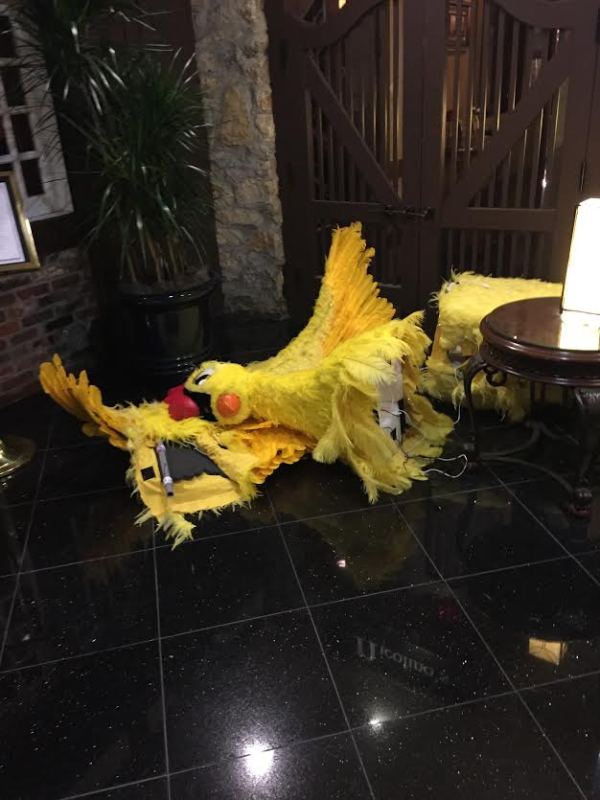
PHOTO PROMPT © Luther Siler
Word Count: 100 words of text, exactly
Genre: Realistic Metaphorical Fiction
Block-Cage
©December 9th, 2015
By Vijaya Sundaram
The prisoner beat his head against the cage, and died …
I stopped typing, and shook my head. I didn’t like the story.
My eight-year-old came into my room, saw the fallen bird, and said, “Sorry Mom, it fell when I reached up to touch it. I’ll fix it.” And she did, after which I hung it from its hook. For a moment, I looked at it fondly, smiling, then went back to my computer, erased my first line, and began again:
When the prisoner beat his head against the prison-bars, he grew wings …
Time melted away.
_______________________________________________
Thanks, as always, to our Fairy Blog-Mother, Rochelle Wisoff-Fields, for hosting Friday Fictioneers, and to Luther Siler for that surreal photograph!
Tags: Bird, Bird-cage, Setting, Writer's Block, Writing
Dec 9, 2015 Friday Fictioneers, Original Short Story

PHOTO PROMPT © Roger Bultot
Word Count: 100 words of text, exactly
Genre: War/Ghost-Fiction
Doors of Deception
©December 9th, 2015
By Vijaya Sundaram
Once, there was a house.
Once, there were warm, living people in this house.
There was a house, with warm, living people in it — now there is dry heather. Wind moans through empty spaces amidst iron scraps. Doors open into the wild, where the sun (or is it a small bomb, or an army Hummer?) shines, blinding me.
Beside it, offices go up, glass-blindingly oblivious to lives gone.
Wandering here, I wonder, Was it worth it?
A soldier steps out, points his gun at me, says, “Move along, citizen.”
I step through the doors, and vanish.
_______________________________________________
Thanks, as always, to our Fairy Blog-Mother, Rochelle Wisoff-Fields (sorry I’m a whole week late with writing this one, since the new one already came out today!), for hosting Friday Fictioneers, where writers meet and write 100-word short stories based on photo-prompts. Thanks to Roger Bultot for the evocative photo!
Tags: #Loss, 100-word original short story based on a photo prompt, Doors, War
Nov 19, 2015 Friday Fictioneers, Original Short Story

Cigarette Butts and Dead Leaves
©November 19th, 2015
By Vijaya Sundaram
Genre: Realistic Fiction
Word Count: 100 words of text, exactly
I sit on the sidewalk near the gutter by our flat, and wait.
Smoking cigarette after cigarette, my fingers stained yellow, my eyes blank, my hands trembling, I wait.
The seasons come and go. Long ago (a year or two, or more?) there had been a bombing near our place.
He’d gone to meet an old friend at our favorite restaurant. “Don’t wait up,” he’d said.
“You know I will,” I’d replied, kissing him.
And I do, every evening.
He was a pillar of flame when he courted me. Now, I am a pillar of ash.
A leaf flutters down.
_____________________________________________________
With thanks, as always, to our beloved Fairy Blog-Mother, Rochelle Wisoff-Fields, for her gracious and lovely leadership as host of Friday Fictioneers, and to the pithy and imaginative CEAyr, for his evocative photograph.
Tags: France, Love and loss, Original 100-word short story based on a photo-prompt
Oct 28, 2015 Friday Fictioneers, Original Short Story

PHOTO PROMPT – © Dale Rogerson
Genre: Greek neo-Myth
Word Count: 100 words of text exactly
Rebirth of the Hydra
©October28th, 2015
By Vijaya Sundaram
Why did I fight Alcaeus? I should’ve recognized him when he arrived. I should have known when he and Iolaus cauterized eight of my heads. I should’ve known that he, named Hera’s Gift, would be my nemesis. And though he severed my one immortal head, and placed it under a rock, I had my revenge, for an arrow he dipped in my blood caused his death.
But they don’t call me Hydra for naught. Aeons passed, water collected around my rock, and a deep basin formed around it. Strength returned.
I was ready to strike again.
_______________________________________________________________________________________________________________
And, as always, a warm “thank you” to Rochelle Wisoff-Fields, our gracious Fairy Blog-Mother, for hosting Friday Fictioneers every week. Thanks, also to the delightful Dale Rogerson, for that intriguing photograph!
Tags: 100-word original short story based on a photo prompt, Greek Mythology, Heracles, The Hydra
Sep 30, 2015 Original Short Story, Writing 101
For my Day 17 post, I searched my old blog for drafts, and found these two things. The first was a draft (ADDENDUM: I found out after checking my private blog just now, that I had published that piece with a different title and opening — so I just took the draft form of it, and added 39 words to it).
As for the second one, I added 2,453 words to its already long 1444-word long draft.
The first (to which I added 39 words):
Refuse to Comply
©June 6th, 2013
By Vijaya Sundaram
With apologies to M.K. Gandhi ( who said, “First they ignore you, then they laugh at you, then they fight you, then you win”), I humbly state this:
First, they notice you.
Then, they respect you.
Then, they woo you with an offer you cannot refuse.
Then, you lose.
Refuse to comply if it insults your intelligence and your aesthetic and moral sense.
Refuse to comply if it is false.
Refuse to comply if it belittles others.
Refuse to comply, especially if untold wealth is promised you.
Refuse to comply, if it diminishes you.
Refuse to comply if it goes against righteousness.
~ Dreamer of Dreams
~~~~~~~~~~~~~~~~~~~~~~~~~~~~~~~~~~~~~~~~~~~~~~~~~~~~~~~~~~~~~~~~
Below is the second piece, a draft of a story that I began on June 10, 2014 (on my other blog), but never completed, and never published, and to which I added 2,453 more words today:
Teddy’s Roses
©September 29th, 2015
By Vijaya Sundaram
Fat Teddy Marino was a fat, jolly old man of sixty-five, and hopelessly provincial.
He had no real concept of a world beyond his very small, narrow one. He didn’t believe in Climate Change, drove a big red SUV, spent winters in Florida, grew hydrangea and roses and other flowers (all of which he fertilized with industrial fertilizer) in his immaculately kept front yard that was covered with weed-killer-sprayed grass. He grew tomatoes and beans, bought from Home Depot, in his back yard, kept a house cat who looked with baleful yellow eyes at passersby from between the dark drapes of their living room window, and had a wife who never seemed to step out-of-doors. He sported a cheerful grin, though his eyes scanned everything inquisitively, as he sat on his deck, and watched the cars go by.
He had always been known as “Fat” Teddy, even since he was a little boy. He didn’t seem to mind, though perhaps, long ago, he might have minded. He might have run home, crying from elementary school, when the other kids teased him for being plump. He might have been ingratiating and a bit of a gossipy tattle-tale in middle school, when he learned that some teachers liked the carriers of tales and gossip, He might have nursed grievances and grudges against all the athletic, slim guys who got all the girls in High School.
It didn’t matter now. Fat Teddy, from working in his father’s convenience store making a small income, went on to undreamed-of riches. He had come into an inheritance when he was twenty-three, the lucky recipient of a reclusive uncle, who had made a small fortune in scamming the gullible, and decided that the least-regarded of his nephews would receive the full benefit of his generosity when he died.
So, Fat Teddy didn’t work another day in his life, except that he would tell you that he was always hard at work, taking care of his home, his yard, his flowers, his finances. He had become something of a financial wizard, multiplying the money that he had inherited, playing the stock market. He spent his afternoons tending to his roses, or hydrangea, or lilies, or daffodils, hyacinths, irises and tulips, according to their season. He put up a large, white fence around his large, two-acre backyard and a hedge running around his property at the front of his house. He always had his curtains drawn, so that no one could look in. He had his many-roomed house and property properly secured with the proper alarm systems, surveillance cameras, and so on. He had a gardener who came once a week, a cook who came every day during the week, but not on weekends, and a succession of maids, who always left in a hurry, after not tendering their notices.
And he had a wife, whom he nursed with the utmost care and love.
For Fat Teddy’s wife was wheelchair-bound, debilitated by the unrelenting progress of a cruel disease. Fat Teddy loved her dearly, and would do anything for her, despite that she had turned into a horrible shrew, who screamed curses at the maids and threw things at them when she was in a truly desperate mood.
Fat Teddy’s provincial nature was known to all in the neighborhood. He believed that his town was the best, his church was the best, his religion was the best, and his politics were the best. He gave to his charities, to his church, to his political party, and to causes he believed in. He believed that he would need to protect himself and his wife from intruders, and had a burglar alarm installed. He also owned a gun, for which he had a legal license, and in the use of which he had been schooled.
His neighbor, Kevin, who had just moved into the neighborhood a few months ago, would politely say “hello” to him every morning or evening when he saw him in the front yard, which was near the sidewalk, and would try to jog on. Fat Teddy would look up, if he were clipping roses, smile a beaming smile at Kevin, and immediately engage him in chat. Groaning inwardly, poor Kevin, a tall, gentle, beautiful man with the slightest hint of epicanthic folds in his eyes, and elegant eyebrows, would stop and allow himself to be assaulted with a few minutes of absolute stupidity.
“Neighborhood’s going to the dogs, isn’t it?” Fat Teddy would say, cheerfully, not seeing a glassy look come into the eyes of his interlocutor. “First that slant-eyed Chinese couple moved in, and then that Indian family, and now, it’s these Mexicans and Haitians! What happened? I thought America was for the Americans.”
“Mumble,” mumbled the trapped Kevin, himself a product of a mixed marriage between an “American” Englishwoman and a “Chinese” American, as he was forced to listen to his diatribe against “un-American Americans.” He’d gesture at his wristwatch and try to make a quick getaway.
“And what do you think of our President? Seems that we’ve got a bunch of jackasses running the country. What I think we need is a better armed citizenry, don’t you?” Fat Teddy would say, oblivious to the resentful and mutinous look on his listener’s face.
Mostly Kevin couldn’t get a word in, and it didn’t matter that Fat Teddy was wrong — Kevin couldn’t get him to engage with actual facts. He would try to explain about white privilege, or tell Teddy that America had become rich on the backs of the black slaves, or that “‘Mericuns” had come to this country as greedy fur-trading, land-seeking interlopers and had wiped out whole Native American populations, while taking over the land.
Fat Teddy just rode roughshod over Kevin, paying no heed to his weak rejoinders. Kevin would say, “But … have you considered that we stole the land from the Mexicans down in Texas?” or, “The Chinese built much of our railroads on the Pacific side in the 19th century.”
Fat Teddy would stop his torrent briefly, look dismissive, and then continue, “So, what do you think of the weather, huh? Hot enough for ya? I don’t mind telling you, this past winter was so cold, I thought I’d freeze my nuts off the minute I stepped out. How’s that “Global Warming,” for Christ’s sake? That’s Global Freezing. These Climate guys, they’re all in some sort of conspiracy — all ’cause of that ‘oBummer guy, him and his “clean energy.” Bet you a million bucks, they’re planning something.”
“Think my cellphone’s buzzing. Listen, I’ve got to take this one. Nice talking to ya — but I gotta go. Bye!” Kevin would say, as he pulled out his cell phone, pretended to check it and look absorbed, as he walked away, waving his hand.
One day, after hearing Kevin complain for the nth time about Fat Teddy, his wife, Susanna, a well-known newspaper columnist, beautiful, blond, curly-haired, brilliant and very “American” looking (notwithstanding the fact that she had a blond Jewish father and a brown-skinned African-American mother, something Fat Teddy would never understand), said, “Why don’t you tell him directly that he’s driving you crazy with his redneck shit and tell him to shut up? The guy’s a racist bigot, for Pete’s sake. Don’t give him the time of day!”
“I can’t,” protested Kevin, weakly, chopping some basil, as he helped her with the pasta primavera they were making for dinner. “He doesn’t listen to what I say.”
“Be a mensch,” she said, tartly, while decanting the cooked pasta into a bowl. “Just butt right in, and tell it like it is.”
“Nah! Not worth it. I’ll just avoid walking down that way, when I go walking in the mornings,” replied Kevin.
Kevin tried avoiding that route, but knew he couldn’t avoid it all the time. Besides, he liked that particular route. The flowers cheered him up.
Neither he nor Susanna knew about Teddy’s wife being wheelchair-bound. All they knew was that Fat Teddy had a wife and that she was ailing and reclusive. The maids who had come and gone seemed to be South-East Asian, and didn’t speak with the neighbors. The cook came during the hours they weren’t home, and the gardener who came once a week was … Mexican.
One hot summer day, Fat Teddy was outside, soaking up the sun, clipping his most favorite rose-bush, pruning a little here and a little bit there. He liked playing gardener, and it gave him a quiet sensation, which, if he had been pressed to describe it, he would have compared to happiness.
He loved this rose-bush. It gave him solace. He would never speak of it, but here was where his heart had found its peace.
_________________________________________________________________
Continued below on September 29th, 2015:
_________________________________________________________________
Today, as he clipped, and watered and tidied his beloved rose-bush, he felt a strange pain in his chest. Out of breath as he always was, he thought it’s just a stitch, and sat back on a large, smooth rock on which were inscribed the letters RM, next to the rosebush. His mind was vacant, and his mouth hung somewhat open at such times. His large, bulbous grey eyes mirrored the sky above him. Looking up, he saw thunderclouds.
The pain increased, like a vice squeezing him. He made a low moan, and slumped over the rosebush, holding his chest, breathing stertorously.
Rose, he thought.
It was a Saturday at 8:30 in the morning.
Kevin came up, jogging, ear buds on. He didn’t hear Fat Teddy. He passed by with a wave of the hand. Fat Teddy did not see him.
It didn’t strike Kevin as odd that Fat Teddy was slumped over until he had gone about twenty-five feet. Then, he stopped abruptly. Without thinking twice, he ran back, shoving his ear buds in his pockets as he ran, and called out to Fat Teddy. A faint groan came from the man. Kevin whipped out his iPhone, called 911 and the local Emergency Medical Services. By the time they arrived, Fat Teddy was unconscious. They put a mask on him, applied CPR, and got him breathing. His eyelids fluttered open, and he held out a hand to Kevin, who immediately went over, and took it. Fat Teddy said, “My wife … tell her, please,” then closed his eyes. Kevin asked the ambulance driver where they were taking Fat Teddy. They named the hospital, the best in the country, told him he had done everything just right, called him a good citizen, and drove away.
Now, with the flashing lights and banshee siren of the ambulance dopplering away from him, he found himself shaking. His heart raced, and he found himself thinking, I hope the old geezer doesn’t die. I’ve become fond of him. Recollecting himself, he remembered Teddy’s wife. I wonder why we’ve never see her, he thought, and went up the steps to Fat Teddy’s house,which was perched like an eyrie high above the others in the neighborhood.
He rang the bell. There was no answer. He pounded the door. There was no answer. Turning the knob, he went in cautiously, now wondering what he would find.
He didn’t have long to wonder. A loud, accusing voice assaulted his senses when he entered the room whose windows were completely draped in deep red curtains, shutting out the loud morning light. His eyes took a moment to adjust, and he saw near the back wall a thin, resentful-looking woman with startling blue eyes, and ice-white hair sitting in a wheelchair.
“Who are you? What are you doing in my house? Where’s my Teddy? Get out of here!” All of this was said in an uninterrupted stream of vitriol.
“Ma’am, I’m Kevin from down the street. Your husband is seriously ill — they’ve taken him to the hospital. That was what the noise on the street was a few minutes ago.”
The old woman took a deep breath, and said, now weakly, “My Teddy is ill? What happened?” Her eyes narrowed suspiciously. “Are you sure someone didn’t beat him up or something? Those blacks moving into the neighborhood, and those Indians — can’t trust those brown-skinned savages!”
“No, Mrs … er … what shall I call you?” he asked, mentally shoring up his indignation against the onslaught of her horribleness.
“You may call me nothing. And I haven’t had my tea yet. Teddy should have thought of me first. And the maid isn’t in on the weekends. Who’ll take care of me?” And she moaned, rocking to and fro in distress.
In spite of his rising dislike of her, Kevin felt sorry for her. He said, “Tell me the maid’s number, and I’ll call her. Don’t worry. I’ll pay. Please don’t distress yourself.”
The old woman pointed to a little black notebook near the telephone. “Her name’s Evangeline Mendez — she’s one of those Filipinas the Agency sends me every time I need a new maid. The number is on the front page, not under “M” — it’s for emergencies. And mind you wipe the phone with one of those wipes from this box on the table. I can’t have your germs all over my telephone.”
Kevin called the number, suppressing his irritation. He was willing to overlook people’s intolerant attitudes, unlike his sharp-witted, impatient Susanna; he loved that about her, though — it balanced him out. Besides, Susanna was kind. If she had been here, she’d have done the same as me, only with a lot of back talk, he thought.
As he listened to the rings, he scanned the mantelpiece, on which were photographs of a young woman and young man, looking proud and happy. Upon second glance, he realized it was a picture of Fat Teddy and his wife. There was another picture of them with a baby in Fat Teddy’s arms. Beside that was a photograph of a radiant young woman.
An accented voice answered on the fifth ring. He asked for Evangeline. It was she. He told her what had happened, and promised to pay her twice her daily wage if she could come and spend the whole of Saturday with the old woman, and leave on Sunday morning. Even as he spoke, he laughed at himself for doing all this, and for what? Still, one cannot ignore one’s conscience.
The person on the other end hesitated for a long time, chatted with an unseen person on the other end, then said, yes, she could come in half an hour. He hung up.
“Evangeline will be here in half an hour. I’ll wait with you. Would you like a cup of tea?”
“Yes, about time! Yes, a cup of tea. One spoon of sugar. Milk. And get me a cookie from the jar near the kitchen window,” answered the old woman.
Kevin went in, found the tea, sugar, milk, started the kettle, and called Susanna, letting her know what had happened, and where he was. She was completely silent for a minute, and Kevin found himself getting nervous. Then, he heard her laugh and laugh.
“You’re a complete idiot, you know that? And I love you for it! Do you want me to come over, and protect you from the old harridan? She sounds quite terrifying,” she said.
“No, I’ll manage, sweetie! Thanks for not getting mad at me for doing this. It’s a pain, but there it is. They’re our neighbors.” He told her he’d return once the maid got there, told her he loved her, and hung up.
“What’s taking you so long?” yelled an angry voice from the other room.
He didn’t answer, just put the mug of steaming, milky, sweet tea, the cookie and a napkin on a tray and carried it to the old woman, who glanced at it, didn’t thank him, and began sucking tea in great gulps from the mug, her eyes never leaving him.
Kevin gestured to the picture on the mantelpiece, and said, “That’s a lovely photograph of you and your husband. Where was it taken? And you have a daughter?”
“I’ll thank you to keep your questions to yourself, mister,” snapped the old woman, but he detected her eyes filling with tears.
Tactfully, he looked away, pretended to read texts on his cellphone, tried to block out the noise of the woman crunching on the cookie, and waited for Evangeline the maid, who finally arrived, duffel bag in hand, flustered and upset.
She also looked a little apprehensive, he thought.
“Do you need help?” he asked Evangeline at the door, after he’d said goodbye to the old woman, who had merely nodded, and muttered something that might have been Thanks!
“No, it’s just … she yell a lot, and accuse me of stealing things,” whispered Evangeline. “I plan give notice on Monday, and now … this!”
He told Evangeline his address, and said he’d bring her money over in the evening. He told her he was going to visit the old man at the hospital. She thanked him, and said, “You’re a good man — not many like you.”
Then, he left.
He went home, where Susanna was waiting. She put some coffee on, while he wrapped his arms around her. He kissed her over and over again. She tasted of honey and caramel, he thought. They danced around the kitchen for a few minutes, and he inhaled the fragrance of her curly hair, thinking how fortunate he was to have her in his life, and how glad he was that she was not an old shrew. And yet … that old woman had once been a vibrant, lovely young woman once, and her husband still loved her.
He told Susanna what he thought. She laughed, and said, “And what if I get a horrid disease, and become ugly and mean. Would you still love me, and cherish me?”
He raised an eyebrow, and said, “Is that even a question?”
Then, she got serious, and said, “You know, the old coot doesn’t seem like a cartoon character any more, does he? I feel bad, somehow, for him. And I wonder what happened to their daughter? She probably couldn’t stand them, and left.”
“It’s not for us to speculate, sweetheart, you know that,” Kevin said.
“Why ever not?” she tossed back, but they moved on to other matters after that.
He showered and called the hospital, but they told him that the old man was undergoing an Emergency Angioplasty, and would be able to receive visitors for six hours. He sighed, and hung up.
Later, he couldn’t concentrate on anything that afternoon and early evening. Susanna was out with one of her newspaper buddies, and wouldn’t be back until later that evening.
He watered his garden, and tried to read The New York Times, but gave it up. It bothered him that the old man was in the hospital and there was no one but himself to check on the old curmudgeon. It bothered him that he hadn’t known until now that Fat Teddy’s wife was in a wheelchair. It bothered him that she hadn’t told him her name. It bothered him that they had a daughter whom they didn’t acknowledge.
He checked his watch, called the hospital, asked for the old man who had come in for an angioplasty that morning, and was told that Mr. Marino was awake ,and ready to receive only family members.
“There’s no family! His wife is wheelchair-bound. I’m his neighbor. I’m the one who called the EMT guys. Can I visit, or not?” he asked, somewhat snappish at having to go through all this.
There was some chat off-phone on the other end, and a perky woman’s voice said, “Yes, of course, Mr. Lee, you may visit.”
And so it was that around 6:00 that evening, after paying the maid, and making sure that Mrs. Marino was comfortable (she was less grouchy now that she’d had her needs attended to), Kevin Lee found himself at the old man’s bed. Fat Teddy gave him a two-thumbs up, and a wide grin, and said in a somewhat weaker version of his booming voice, “Come sit down, sit down! Good of you to visit. That was a scare, hahn? It was good that these guys got workin’ on me right away. If it hadn’t been for you …” and his voice trailed off, and a little fear crept around his eyes. He resumed, “I cannot die, I cannot. My wife … did you see her? Did you talk to her? What did she say?”
Kevin told him what he’d done, and Fat Teddy nodded and looked pleased. “I’ll pay you back what you paid the maid. You know, one of the surgeons who worked on me was one of them Indians. I wasn’t too pleased about it at first, but they tell me he is one of the finest in the world. What can you do? Well, I sure am glad he did what he did for me.”
Kevin leaned over and asked the question that had been burning him up, “You know, I’m curious. I didn’t know you had a kid. I saw that lovely photograph of her. Where’s your daughter now?”
Fat Teddy’s face grew dark, and his eyes filled with tears. He looked agitated, and his mouth trembled. Instantly regretting his question, Kevin said, hastily, “It’s all right. I’m sorry, I didn’t mean to pry.”
Fat Teddy said nothing for a moment, then whispered, “Rose, my Rose, why did you leave us? Why?”
An unimaginable tragedy hung in the air between them.
Kevin looked around, desperate to change the topic. “Would you like some water? Can I get you something?”
“No, no, it’s all right,” said Fat Teddy. “She died. She ran off and married a black man, and then, they got themselves killed in a car wreck. Stupid shit was driving too fast. I was driving after them. I was going to kill him with my gun. Good thing he died before that.” He stopped, looking a little shocked at himself. “Anyway, I don’t want to remember that. It hurts my heart. My daughter is dead. She was my Rose, our Rose, so full of life, so beautiful, and she left us.” He paused, and his voice shook a little. “Look, I want to thank you … and I don’t even know your last name!”
“My name is Lee, Kevin Lee.”
“What kind of name is that? Lee?”
“It’s Chinese, Mr. Marino. My father was half-Chinese.”
There was a silence in the room.
Mr. Marino looked around vaguely and said, “World’s changing, huh? All this melting pot stuff? It’s not bad, is it? I mean, I like you, and you saved my life, and you’re Chinese, for cryin’ out loud. And that Indian surgeon, and that other colored doctor who was there too. Mind you, I’d swear my colored nurse here’ll kill me if I’m not looking, but still. She’s neat, she’s clean. She’s good at her job. You know what? I’m glad you live down the street.”
Kevin rolled his eyes mentally, sighed internally, and said, “I’m glad as well that you live down the street, Mr. Marino. Maybe we’ll have you over for dinner. I’ll have to warn you though, my wife’s half-black, half-Jewish. Can your heart stand that?”
Mr. Marino laughed loudly, and set a machine beeping. A black nurse came running into the room, and looked stern.
He stopped laughing. She shook her finger at him, and said to Kevin, “Don’t excite him. He’s weak after surgery. You be good now, Mr. Marino.” She adjusted his sheets, patted him on the arm, and left. Mr. Marino looked rather shaken by all this kindness.
Kevin smiled to himself a little, waved goodbye, and promised to come the next morning, and take him home.
As he shut the door, he thought he heard the old man whisper Rose, my Rose!
________________________________________________________________________________
Tags: #Family, #kindness, #Life, #Love, #Original Short Story by Vijaya Sundaram, devotion, disability, duty, neighborliness, Prejudice, racism